

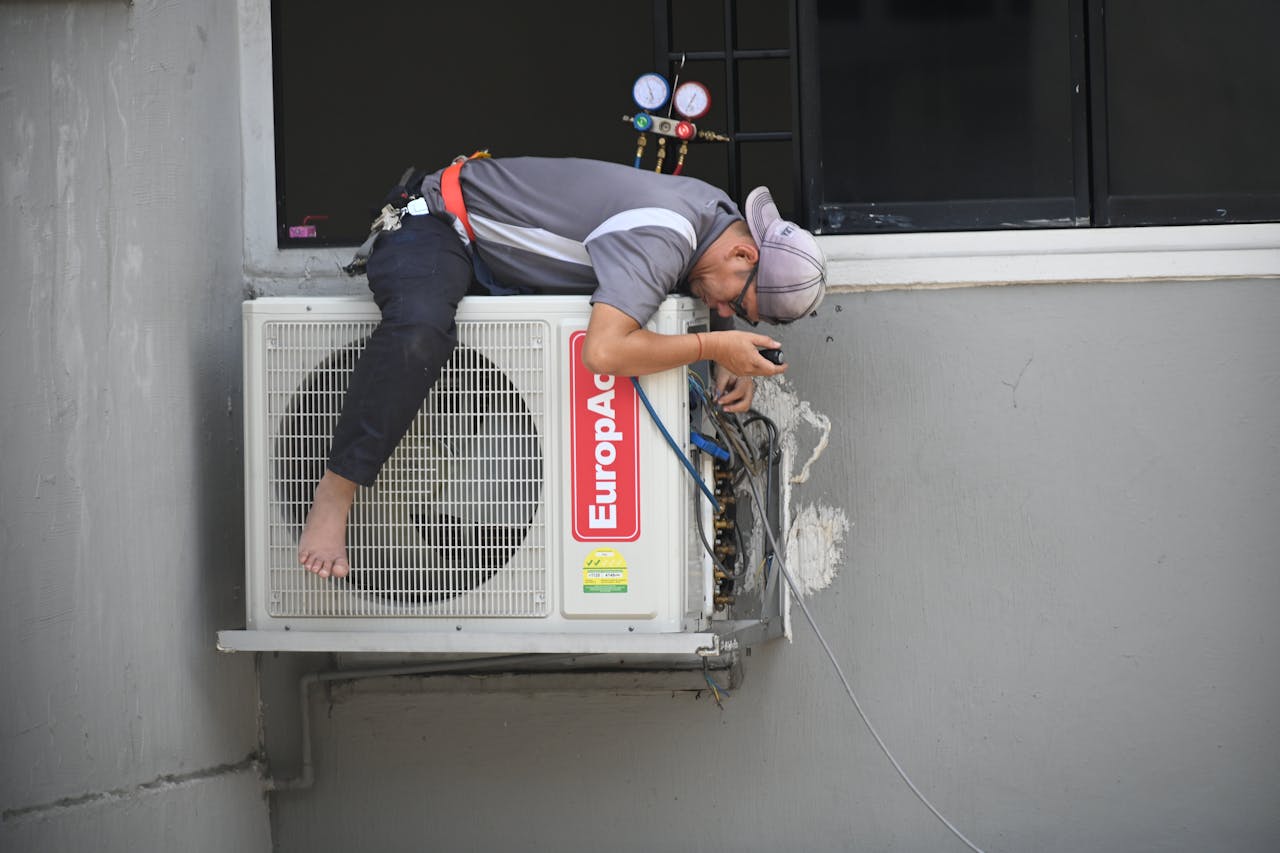
1. Understanding the Role of Your Air Conditioning Unit in Daily Comfort
An air conditioner is an essential part of year-round home comfort, not just a seasonal luxury. It controls temperature in the summer and promotes air circulation and humidity control in the winter. A steady interior atmosphere that promotes improved sleep, productivity, and general well-being is created when an AC unit runs effectively. However, a lot of homeowners don’t realize how much regular maintenance affects performance. Even a top-notch system finds it difficult to provide constant comfort without routine maintenance. Effectiveness is gradually diminished by dust accumulation, worn parts, and airflow limitations. Regardless of the season, proper air conditioning unit maintenance guarantees that your system maintains balanced indoor comfort and reacts swiftly to changing weather conditions.
2. How Regular Maintenance Improves Energy Efficiency
Improved energy efficiency is one of the most often disregarded advantages of air conditioning unit maintenance. Energy consumption is immediately decreased by a clean, well-maintained system since it uses less energy to cool or circulate air. Low refrigerant levels, clogged coils, and dirty filters make the system work harder and use more electricity. This tension eventually results in increased utility costs and needless internal component wear. Technicians can fix minor inefficiencies before they become costly issues by performing routine inspections and tune-ups. The system uses energy efficiently when components run at maximum efficiency and airflow is smooth. Regular maintenance not only reduces expenses but also promotes year-round, ecologically friendly energy consumption.
3. Preventing Unexpected Breakdowns Through Proactive Care
A malfunctioning air conditioner amid severe weather is one of the most painful things. The most dependable method of avoiding unexpected malfunctions that interfere with day-to-day activities is routine maintenance. Technicians find worn belts, loose connections, electrical problems, and aged equipment that could break suddenly during routine maintenance. Early resolution of these problems lowers the likelihood of emergency repairs, which are frequently more expensive and unpleasant. System care is changed from a reactive procedure to a preventive one with proactive air conditioning unit maintenance. Homeowners may rest easy knowing their system is ready for high use rather than waiting for issues to arise. For year-round comfort, this dependability is crucial, particularly in areas with variable weather.
4. Extending the Lifespan of Your Air Conditioning System
Maintenance is essential to safeguarding an air conditioning system, which is a substantial financial investment. Regularly maintained systems typically outlive neglected ones by a number of years. When maintenance is neglected, dirt buildup, inadequate lubrication, and unregulated wear progressively reduce system life. Regular maintenance minimizes needless strain by keeping parts greased, clean, and calibrated. An AC unit needs regular maintenance, just like an automobile benefits from oil changes and inspections. Homeowners can maximize their return on investment and postpone expensive replacements by extending the system’s operational lifespan. Maintaining system dependability for years to come is just as important to long-term comfort as current performance.
5. Maintaining Healthy Indoor Air Quality
Year-round health and comfort are impacted by indoor air quality, which is directly impacted by air conditioning unit maintenance. Over time, dust, allergens, and pollutants are gathered by filters, ducts, and coils. Contaminants spread across living areas if these parts are not cleaned or replaced. Allergies, asthma, and other respiratory conditions may worsen as a result. The effectiveness of the filters and the clean, balanced airflow are guaranteed by routine maintenance. Technicians also look for moisture accumulation, which can cause mold to grow. Clean air promotes general wellbeing and makes interior spaces feel fresher. Individuals with sensitivities, senior inhabitants, and households with children should pay particular attention to maintaining adequate indoor air quality.
6. Enhancing Comfort Consistency Across All Seasons
Temperature fluctuations frequently indicate inadequate system upkeep. Unbalanced airflow, unclean components, or malfunctioning parts are indicated by rooms that feel excessively warm or cold. Maintaining a home or building’s uniform temperature distribution is made easier with routine maintenance for air conditioners. Technicians check thermostats, modify airflow, and make sure the system reacts to settings correctly. In milder months when temperature regulation is still important, as well as during the hottest summer months, this stability enhances comfort. A well-maintained unit avoids abrupt temperature swings by slowly adjusting to daily and seasonal changes. All year long, daily routines, sleep quality, and general happiness with indoor spaces are all improved by consistent comfort.
7. Reducing Long-Term Repair and Operating Costs
Although it may seem like a strategy to save money, neglecting maintenance frequently results in increased costs over time. Unnoticed minor problems have the potential to develop into significant fixes or total system breakdown. Frequent maintenance lowers the risk of emergency service calls and expensive component replacements. Additionally, it increases operating effectiveness, which reduces monthly utility costs. Homeowners benefit from anticipated maintenance expenditures rather than unforeseen financial surprises by investing in annual checkups. A cost-control method that strikes a balance between immediate maintenance and long-term savings is air conditioning unit maintenance. Over time, this strategy turns out to be significantly more cost-effective than coping with frequent malfunctions and ineffective functioning.
8. Supporting System Performance During Extreme Weather
Air conditioning systems are severely stressed by extreme temperatures. An unmaintained unit may struggle or fail completely during heat waves or exceptionally warm times. By ensuring that parts are clean, refrigerant levels are accurate, and airflow is unhindered, maintenance gets the system ready to manage peak demand. When the system needs to run for long periods of time, this preparedness is essential. A well-maintained machine minimizes overheating, cools more efficiently, and recovers more quickly. During severe weather, dependable operation safeguards indoor comfort and avoids needless system stress. Regardless of erratic weather, year-round maintenance guarantees that your air conditioner is always ready.
9. Protecting Manufacturer Warranties and System Coverage
For warranties to remain valid, many air conditioning manufacturers demand documentation of routine maintenance. Homeowners may be left liable for costly repairs that would otherwise be covered if they miss scheduled maintenance. Maintenance records show that the system has been adequately maintained in accordance with manufacturer recommendations. If a significant component breaks, this protection becomes even more crucial. Maintenance for air conditioners protects warranty benefits and financial security in addition to performance. Homeowners can depend on warranty coverage when necessary if service conditions are upheld. Long-term trust in the system and peace of mind are enhanced by this additional security.
10. Improving System Responsiveness and Comfort Control
A well-maintained air conditioner reacts to thermostat changes more precisely. Neglected components frequently cause sluggish controls, frequent cycling, or delayed cooling. Maintenance ensures that sensors, controls, and mechanical components function properly by restoring proper calibration. Homeowners can easily adjust indoor comfort because to its reactivity. A well-maintained system produces results fast and effectively, whether the temperature is adjusted for activity during the day or for sleep at night. Better control reduces misuse and improves comfort. Air conditioning unit maintenance helps produce a customized interior atmosphere that easily adjusts to daily routines and shifting preferences by maintaining the system’s responsiveness.
11. Promoting Sustainable and Environmentally Responsible Operation
By lowering energy waste and prolonging system life, routine maintenance promotes sustainability. Efficient systems reduce carbon emissions related to energy production since they use less electricity. Leaks that could endanger the environment are also avoided with proper refrigerant management. Homeowners can avoid material waste and lessen the need for frequent replacements by maintaining optimal performance. Maintaining an air conditioner balances environmental responsibility with individual comfort. Little things like changing filters and cleaning coils add up to a big impact. By lowering annual energy consumption and environmental effect, sustainable operation benefits not only individual households but also the larger community.
12. Making Air Conditioning Maintenance a Year-Round Priority
While many consider air conditioning maintenance to be a seasonal chore, true comfort necessitates year-round care. Seasons affect how systems function, and routine inspections guarantee that they are prepared for both times of high demand and low usage. Preventing delays and unplanned failures can be achieved by scheduling maintenance prior to busy times. A year-round strategy preserves constant comfort levels and keeps parts in top condition. Homeowners go from reactive fixes to proactive system management by emphasizing continuous care. Instead of being a sporadic task, air conditioning unit maintenance becomes a part of a long-term comfort strategy. This kind of thinking guarantees dependable performance, reduced expenses, and long-lasting interior comfort all year long.